Ipamorelin
$59.99
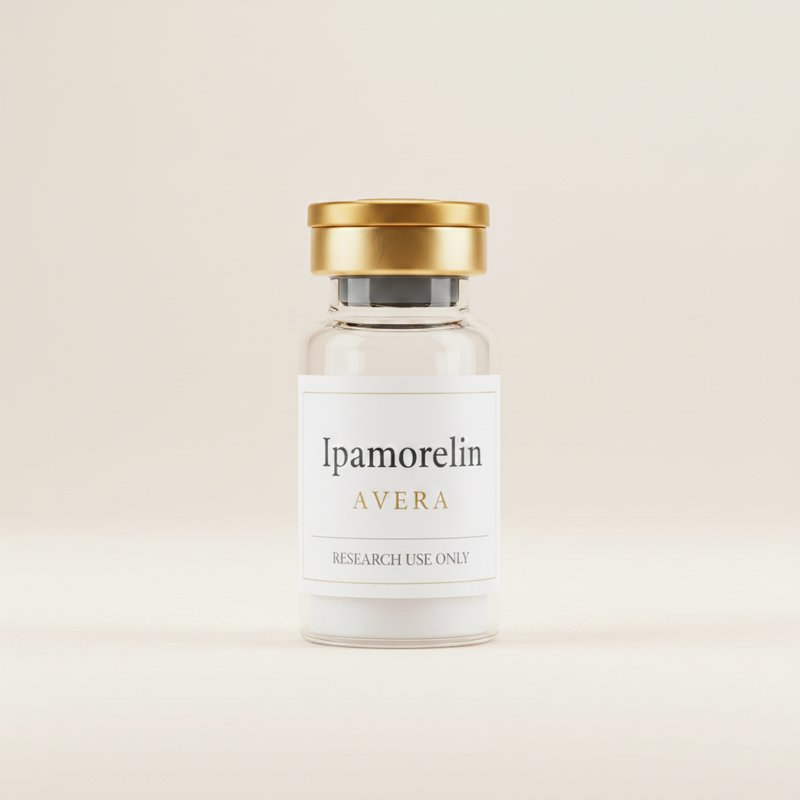
Research-Grade Compound · RUO
Ipamorelin Research Peptide
Selective pentapeptide GHS-R1a agonist studied for growth hormone secretagogue pharmacology with minimal corticotroph axis activation in pituitary cell models
$59.99
10 mgUSD · Research GradeLyophilized, filled and sealed in our U.S. facility from globally sourced peptide. Independently third-party tested, with batch-specific COAs on file.
Purity Guarantee
If any compound falls short of ≥99% purity on its COA, contact us and we'll make it right.
Add $200.00 more for free shipping. Keep Shopping
⚗ Research Use Only. Not for human consumption.
Scientific Context
Research Applications
- 01
Neuroendocrinology researchers studying ghrelin receptor (GHS-R1a) pharmacology, selectivity profiles, and GH pulse characterization in pituitary somatotroph culture systems
- 02
Comparative pharmacology laboratories evaluating GH secretagogue selectivity against cortisol and ACTH co-secretion as a research variable in hypothalamic-pituitary-adrenal axis studies
- 03
Scientists investigating combinatorial GHRH + GHS-R1a dual-pathway GH secretion dynamics as a mechanistic research tool
Observed Mechanisms
In-Vitro Activity Profile
GHS-R1a Selective Agonism
Binds the growth hormone secretagogue receptor 1a (GHS-R1a) with high selectivity, activating Gq/11 protein signaling and IP3-mediated calcium release in pituitary somatotroph cells — a studied mechanism for GH secretagogue research.
Corticotroph Axis Selectivity
In vitro and preclinical studies document significantly reduced ACTH and cortisol co-secretion compared to non-selective GHRPs (GHRP-2, GHRP-6), providing a cleaner pharmacological profile for GH-specific secretagogue research.
Dual-Pathway Synergy Tool
Combined GHS-R1a and GHRHR activation (ipamorelin + CJC-1295) has been studied in preclinical models for additive or synergistic GH secretion amplification through mechanistically distinct receptor systems.
Related Compounds
Frequently Researched Together
Ipamorelin is a synthetic pentapeptide and selective growth hormone secretagogue that mimics the action of ghrelin at the GHS-R1a receptor. Preclinical research has examined its ability to stimulate pulsatile GH release without significantly affecting cortisol or prolactin levels, distinguishing it from earlier generation secretagogues. Laboratory studies have explored its applications in metabolic rate, body composition, and IGF-1 axis research in cell and animal models.
Common Questions